History of Kolkata

Kolkata

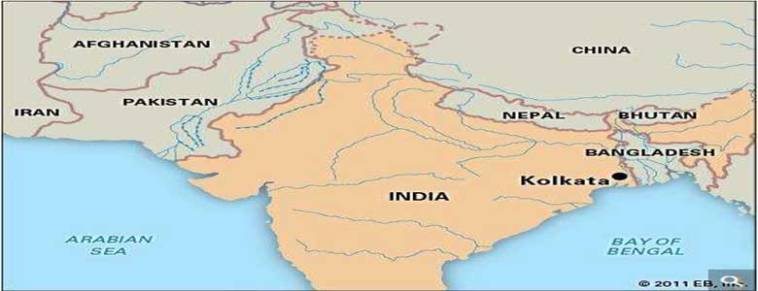
Kolkata, formerly referred to as Calcutta in English, is the capital of the Indian nation of West Bengal and is placed in eastern India on the east financial institution of the River Hooghly. The city was a colonial metropolis advanced via the British East India business enterprise and then by using the British Empire. Kolkata turned into the capital of the British Indian empire until 1911 while the capital became relocated to Delhi. Kolkata grew hastily in the nineteenth century to become the second town of the British Empire. This was followed by means of the development of a subculture that fused ecu philosophies with the Indian way of life.
Kolkata is likewise mentioned for its modern history, starting from the Indian struggle for independence to the leftist Naxalite and trade-union moves. Labelled the “Cultural Capital of India”, “The city of Processions”, “The town of Palaces”, and the “metropolis of pleasure”, Kolkata has also been home to distinguished people along with, Raja Ram Mohan Roy, Ishwar Chandra Vidyasagar, Rabindranath Tagore, Keshub Chandra Sen, Jagadish Chandra Bose, Ramakrishna Paramahamsa, Sarada Devi, Swami Vivekananda, Sister Nivedita, Sri Aurobindo, Subhas Chandra Bose, Satyendra Nath Bose, Swami Sri Yukteswar Giri, Paramahansa Yogananda, Anil Kumar gain, Kazi Nazrul Islam, Jibanananda Das, A. C. Bhaktivedanta Swami Prabhupada, Maulana Abul Kalam Azad, Prabhat Ranjan Sarkar, Mother Teresa, Satyajit Ray, Ustad Ali Akbar Khan, Ustad Vilayat Khan, and Pandit Ravi Shankar. troubles associated with rapid urbanization started out to plague Kolkata from the 1930s and the metropolis remains an example of the urbanization challenges of the growing nations
there is a protracted chain of occasions in the back of the arrival of the British East India agency in Bengal, especially activity Charnock in Sutanuti in 1690. these incidents are documented in numerous information of the East India agency and by means of several authors [Bruce 1810 (Vol I and II), Marshman Vol I, Unknown 1829; see references below]. those files inform the tale of how the English were significantly overwhelmed and worn out from Bengal numerous instances through the forces of the Mughal Emperor and the way on every occasion they got here back to Bengal to retain their exchange.

Top Tourist spots in Sylhet

RATARGUL

Ratargul

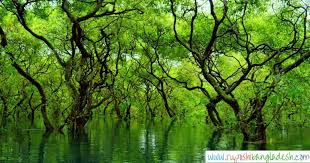
Ratargul is the only freshwater swamp woodland in Bangladesh. no matter its lifestyles over a giant stretch of swampland in the no longer too distant past, the swamp woodland now occupies a place of most effective rectangular kilometers. A densely wooded area comprising in most cases local hijol and koroch timber, Ratargul gives a sanctuary for distinct species of birds, monkeys, snakes, and other reptiles.

LALAKHAL

LALAKHAL

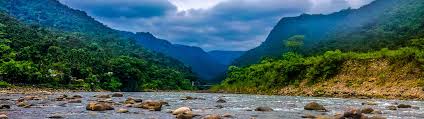
Lalakhal, that is another top traveler attraction in Jaintapur Upazilla, is protected with hills, herbal forests, tea gardens, and rivers beneath the Jainta Hill which comprises part of the Meghalaya levels of India. Flowing from the Indian component, the river Myntdu enters Lalakhal because the Saree and meets the river Guaiyan after passing Sarighat. Over a stretch of almost 12 km of the river from Lalakhal to Sarighat, the color of the water remains transparent inexperienced in wintry weather (in addition to in different seasons whilst it does now not rain) due to the minerals flowing with water and the sandy river bed.

SREEMONGOL

SREEMONGOL

all of us traveling in and around Sreemongol is sure to be greeted by lush green tea gardens that reach over miles and miles of hilly regions, now not to speak of the chirping birds and shading trees except the pineapple and lemon gardens.
just kilometers away from the city, BTRI is effortlessly on hand via rickshaw or CNG-run car-rickshaw. With permission, you may input the ability and be curious about exquisite flower gardens, age-antique tea flora, a tea factory, a testing lab and plenty of extras.

BISNAKHANDI

BISNAKHANDI.jpg

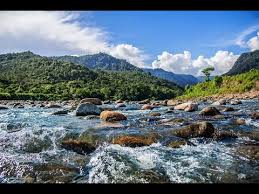
Bisnakandi is a village situated in Rustompur Union under Guainghat Upazilla. that is in which many layers of the Khasi mountain meet at an unmarried factor from both facets. Flowing from above is a high fall. adding to its allure are darkish clouds hugging the mountain within the rainy season. And flowing underneath towards Bholaganj is a branch of the Piyain. alongside the movement flowing from high up in the mountain come huge boulders which might be deposited and mined in Bisnakandi.

JAFLONG

JAFLONG

Despite the loss of its former splendor due to unrestricted mining and crushing of stones, Jaflong is still a ‘must-see’ destination for tourists visiting Sylhet. Flowing from the north Khasi mountains, the river Dauki enters Bangladesh under the name ‘Piyain’, along with the bank of which lies the spectacular Jaflong. About 62 km north-east from Sylhet city, Jaflong is in the East Jaflong Union under Guainghat Upazilla. Visitors can hire boats to go to the Zero Point and see the beautiful hanging bridge over the Dauki. Just across the river on the western side are the villages Sangrampunji and Nakshiapunji, which are accessible through ferries or rented boats. Just beside Nakshiapunji is Jaflong Tea Garden which is a top tourist attraction.


Traveling by Train in Bangladesh

dhaka-sylhet

Taking the train in Bangladesh
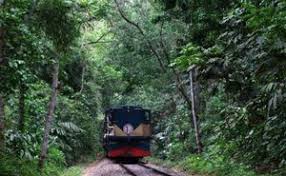
Watching the news, you could be forgiven for thinking that Bangladesh was not so much a country as a disaster zone. But you’d be surprised. It is a fascinating country with a rich and varied history and at present fairly few tourists. Bangladesh has a largely British-built rail network linking most major towns and cities, including Dhaka & Chittagong. The network is divided into two halves, eastern and western, by the great rivers which divide the country itself. The western network is the largely broad gauge, the eastern network largely meters gauge. Unfortunately, connections between these two networks are often poor. There is a railway route map at http://www.railway.gov.bd.Dhaka – Chittagong by train…
There is a good train service between the capital city, Dhaka, and Bangladesh’s second city, Chittagong. Dhaka & Chittagong are both in the eastern half of the country on the meter-gauge train network, linked by fast daytime InterCity trains and two good overnight trains with sleeping-cars.
Dhaka ► Chittagong
Train number: 788 704 4 702 2 742
Type:  Intercity Mail
Name: Sonar Bangla
Express Mahanagar
Provati Karnaphuli
Express Subarna
Express Chittagong
Mail Turna Express

Days: not Saturday daily not Friday Daily
Dhaka depart: 07:00 07:45 08:30 15:00 22:30 23:30
Chittagong arrive: 12:40 14:55 18:30 20:30 07:50 07:10
Intercity = Fast quality train, restaurant car, recommended. AC class seats, Snigdha, 1st class, shuvon chair, shuvon & shulov seats.
Turna Express = Overnight quality intercity service with air-conditioned AC class 2-berth sleepers, AC class seats, 1st class seats, shuvon chair, shuvon & shulovseats.
Sonar Bangla Express uses the latest carriages, delivered in 2016.
Express = Slower than InterCity trains. Air-conditioned AC class seats, 1st class seats, shuvon chair, shuvon & shulov seats.
Mail = Slower overnight train with AC class 2-berth sleepers, 1st class 4-berth sleepers, 1st class seats, shuvon chair, shuvon & shulov seats.
not Sunday = daily except Sundays; not Friday = daily except Fridays.
Chittagong ► Dhaka
Train number: 701 721 3 703 787 1 741
Type: Intercity Intercity Express Intercity Intercity Mail Intercity
Name: Subarna
Express Mohanagar
Provati Karnaphuli
Express Mohanagar
Goduli Sonar Bangla
Express Dhaka
Mail Turna Express

Days: not Friday not Sunday daily, not Saturday daily
Chittagong depart: 07:00 12:30 10:00 15:00 17:00 22:30 23:00
Dhaka arrive: 12:40 19:30 20:10 22:15 22:40 07:20 06:30
Fares
Dhaka – Chittagong one-way fares per person, in Taka…
AC class berth AC class seat Snigdha 1st class berth 1st class seat Shuvon Chair Shuvon Shulov
1093 731 610 635 425 320 285 160
£1 = approx 115 taka. $1 = approx 75 taka.
Children under 3 travel free, children aged 3 to 9 half fare. Children 10 and over pay the adult fare.
You can check fares at http://www.railway.gov.bd.
How to buy tickets…
Bangladeshi Railways now have an online ticket service, see http://www.esheba.cnsbd.com, but it only works with Bangladeshi bank cards and tickets are only sent to Bangladesh mobile phones, so it’s no good for overseas visitors. The high-quality InterCity trains are very popular and often leave full, so make reservations at a station as soon as you can, or find a suitable local travel agency who will arrange tickets for you. Feedback appreciated.
Classes of accommodation…
There are various classes on Bangladeshi trains, where AC means air-conditioned…
– AC class berth. These are air-conditioned 2-berth sleeper compartments on the best overnight trains.
– AC class seat. The best accommodation on daytime trains. Air-conditioned, carpeted cars with reclining seats, all reserved.
– Snigdha. These are AC class air-conditioned reclining seat cars with the TV screen.
– 1st class berth. 1st class berths are arranged in 4-berth sleeper compartments on overnight trains.
– 1st class seat, all reserved.
– 2nd class shuvon chair. Shuvon means better looking, a second class chair car with reclining seats, all reserved.
– 2nd class shuvon. More basic seating than shuvon chair cars, all reserved.
– 2nd class Shulov. Shulov means easily available. These are second-class cars with bench seats. Unreserved seating, often crowded.